
SPC Flooring vs LVT: Which One Fits Best?
- Carpet Galleria

- Jun 11
- 5 min read
Choosing between SPC and LVT usually comes down to one practical question: what kind of space are you flooring, and how hard will that floor have to work? When buyers compare spc flooring vs lvt, they are usually balancing durability, comfort, installation conditions, and budget - not just appearance. Both are popular resilient flooring options, but they do not perform the same way once foot traffic, moisture, furniture load, and subfloor condition enter the picture.
SPC flooring vs LVT: the core difference
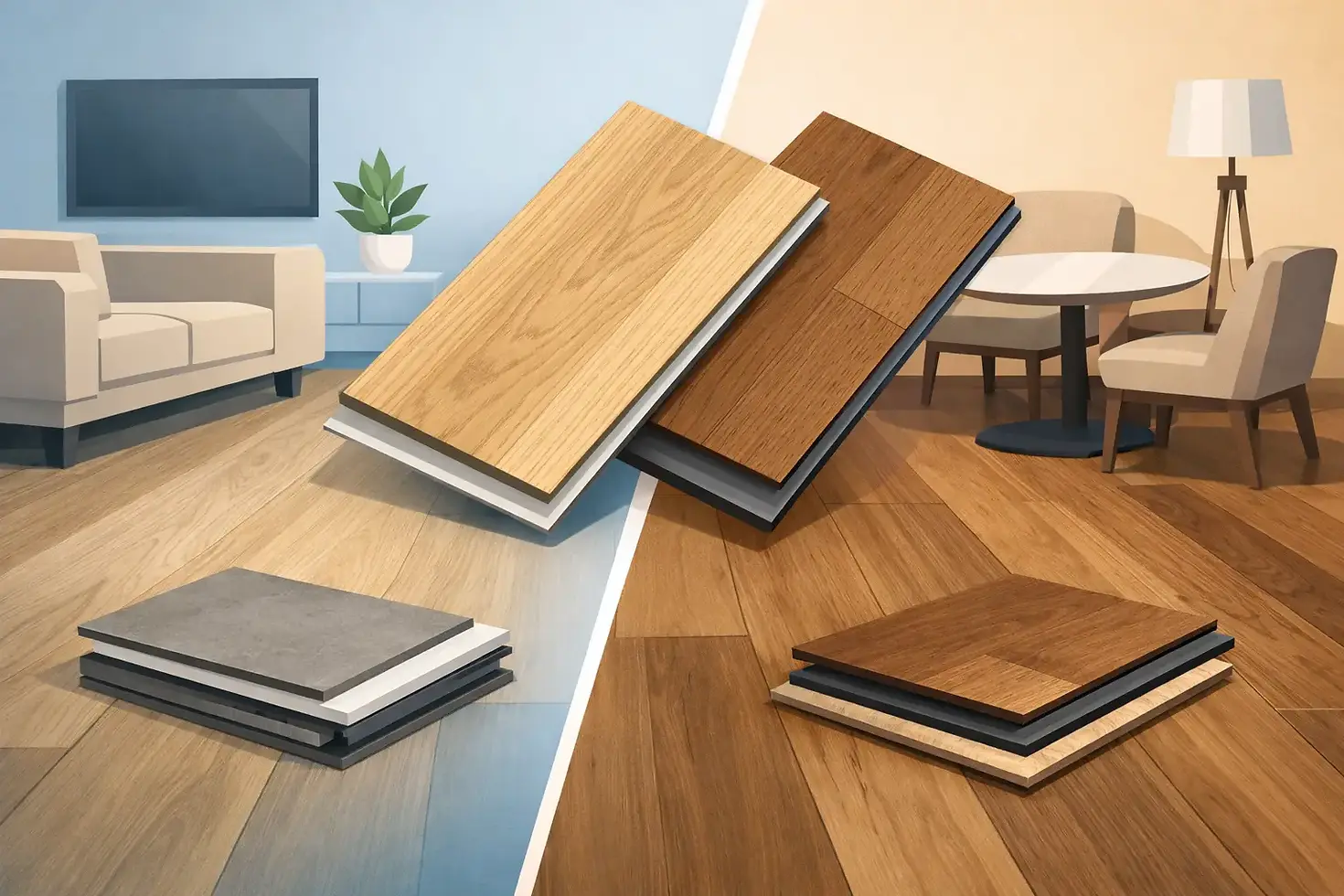
The biggest difference is in the construction. SPC stands for stone plastic composite, and it has a rigid core designed for higher stability and stronger resistance to dents and movement. LVT stands for luxury vinyl tile, and it is generally more flexible underfoot, with a softer feel and a wider reputation for comfort in residential settings.
That core construction affects almost everything else. SPC tends to handle uneven subfloors better, resists expansion and contraction more effectively, and performs well in demanding commercial interiors. LVT, on the other hand, is often chosen when comfort, quieter footfall, and a more forgiving walking surface matter most.
If you are sourcing flooring for apartments, villas, offices, hotel rooms, retail units, or fit-out projects, this is not a minor technical detail. It shapes the lifespan, installation method, and long-term maintenance of the floor.
How each floor is built
SPC construction
SPC flooring is built with a rigid composite core, usually topped with a printed design layer and a protective wear layer. Many products also include an attached underlayment. Because the core is dense and stable, SPC feels firmer and more solid under pressure.
This is why it is commonly specified for spaces with rolling loads, heavier furniture, or constant foot traffic. In practical terms, that could mean office corridors, hotel reception areas, retail spaces, or busy family homes with pets and kids.
LVT construction
LVT is made from layers of vinyl, but without the same rigid stone-composite core found in SPC. Some LVT products are glue-down, while others are click systems. The material is generally more flexible, which can be an advantage in areas where comfort and acoustic softness are priorities.
LVT also has strong design appeal. Wood looks, stone looks, and contemporary finishes are widely available, making it a reliable option for buyers who want design flexibility without moving into natural wood or stone pricing.
Durability: which one handles wear better?
If durability is the first concern, SPC usually has the edge. Its rigid core gives it better resistance to dents from furniture legs, wheeled traffic, and impact in active spaces. That makes it a smart choice for commercial settings and high-use residential rooms such as kitchens, entryways, and living areas.
LVT is still durable, especially in quality commercial-grade formats with the right wear layer, but it is not always as resistant to indentation. In a low- to medium-traffic home, that may not be a deal breaker. In a furnished office or hospitality setting, it matters more.
Wear layer thickness also plays a major role, regardless of product type. A well-specified LVT can outperform a low-grade SPC if the wear layer and installation are better suited to the project. Buyers should avoid comparing only by category and ignore specification details.
Water resistance and moisture performance
Both SPC and LVT are known for water resistance, which is one reason they are often chosen over laminate or some wood products. For kitchens, pantries, laundry rooms, and many commercial applications, both can be suitable.
SPC tends to inspire more confidence where moisture conditions are less predictable. Its rigid core is highly stable, and many buyers prefer it for spaces where spills, mopping, or humidity are part of normal use. That does not mean it solves every moisture problem. If the subfloor has ongoing moisture issues, proper preparation is still necessary.
LVT also performs well around water, but product type matters. Glue-down LVT and click LVT can behave differently depending on the environment and installation quality. In other words, water resistance is a feature of both, but the project details still decide the result.
Comfort underfoot and sound
This is where LVT often wins. It usually feels warmer, softer, and quieter to walk on, which can be a major advantage in bedrooms, residential living spaces, and guest rooms. If the goal is a more comfortable everyday surface, LVT is often easier to live with.
SPC is firmer. Some clients like that because it feels stable and substantial, but others notice the harder feel right away. In upper-floor residential applications or quieter interiors, that firmness can also translate into more sound unless the flooring includes a good acoustic backing or is paired with the right underlayment.
So the better option depends on the use case. For a family lounge or bedroom renovation, comfort may outweigh extra rigidity. For a shop, office, or corridor, performance under pressure may matter more.
Installation and subfloor conditions
SPC is often preferred when subfloor imperfections are a concern. Its rigid structure can bridge minor irregularities better than more flexible flooring types, which may reduce preparation demands in some projects. That can help on fast-track renovations where time and labor costs matter.
LVT usually asks for a smoother, better-prepared substrate, especially in glue-down formats. Because it is more flexible, any bumps, dips, or imperfections underneath may telegraph through over time. That is not a flaw in the product - it is simply part of getting the best finish.
Installation method matters too. Click systems are often faster, while glue-down systems can offer strong long-term performance in the right commercial settings. The best choice depends on traffic, downtime, subfloor quality, and whether individual plank replacement may be needed later.
Design and appearance
Visually, both SPC and LVT offer a wide range of finishes, from wood planks to stone-inspired tiles. For many buyers, the look will not be the deciding factor because both categories now offer realistic surface textures and attractive patterns.
The more useful question is whether the floor needs to coordinate with a broader interior scheme while staying inside budget. In that respect, both products are strong options. They give designers, contractors, and homeowners plenty of room to match color, style, and application without stepping into more maintenance-heavy materials.
Cost: upfront price vs long-term value
Price varies by brand, wear layer, thickness, and installation method, so there is no universal rule that one is always cheaper. However, buyers should look beyond the carton price.
SPC can offer better value in demanding spaces because its rigid construction may reduce damage risk and improve lifespan under heavier use. LVT can be better value in comfort-focused environments where a softer walking experience is more important than maximum resistance to indentation.
Installation cost can also shift the equation. A floor that seems cheaper per square foot may require more subfloor preparation, more adhesive work, or more downtime during fitting. For commercial projects, these details can have a real impact on budget.
Which one should you choose?
For heavy-traffic commercial interiors, busy family homes, retail units, and areas where subfloor stability and dent resistance matter, SPC is often the safer choice. It is practical, durable, and well-suited to projects where the floor needs to take daily punishment without much fuss.
For bedrooms, guest rooms, apartments, and residential spaces where comfort and quieter footfall are higher priorities, LVT often makes more sense. It delivers strong aesthetics and everyday durability with a more comfortable feel.
For hospitality and office use, the answer is often more specific than buyers expect. Front-of-house, corridors, and active shared areas may lean toward SPC. Private rooms, lower-impact zones, or spaces with stronger acoustic expectations may lean toward LVT. That is why product selection should match the actual use of each area, not just the overall building type.
A supplier with both residential and commercial flooring experience, such as Carpet Galleria, can usually help narrow the decision faster by looking at traffic level, subfloor condition, design goals, and budget together instead of treating the choice as a simple product comparison.
The right floor is the one that fits the way the space is used every day. If you start there, the SPC versus LVT decision becomes much clearer.


Comments